
On Dicky
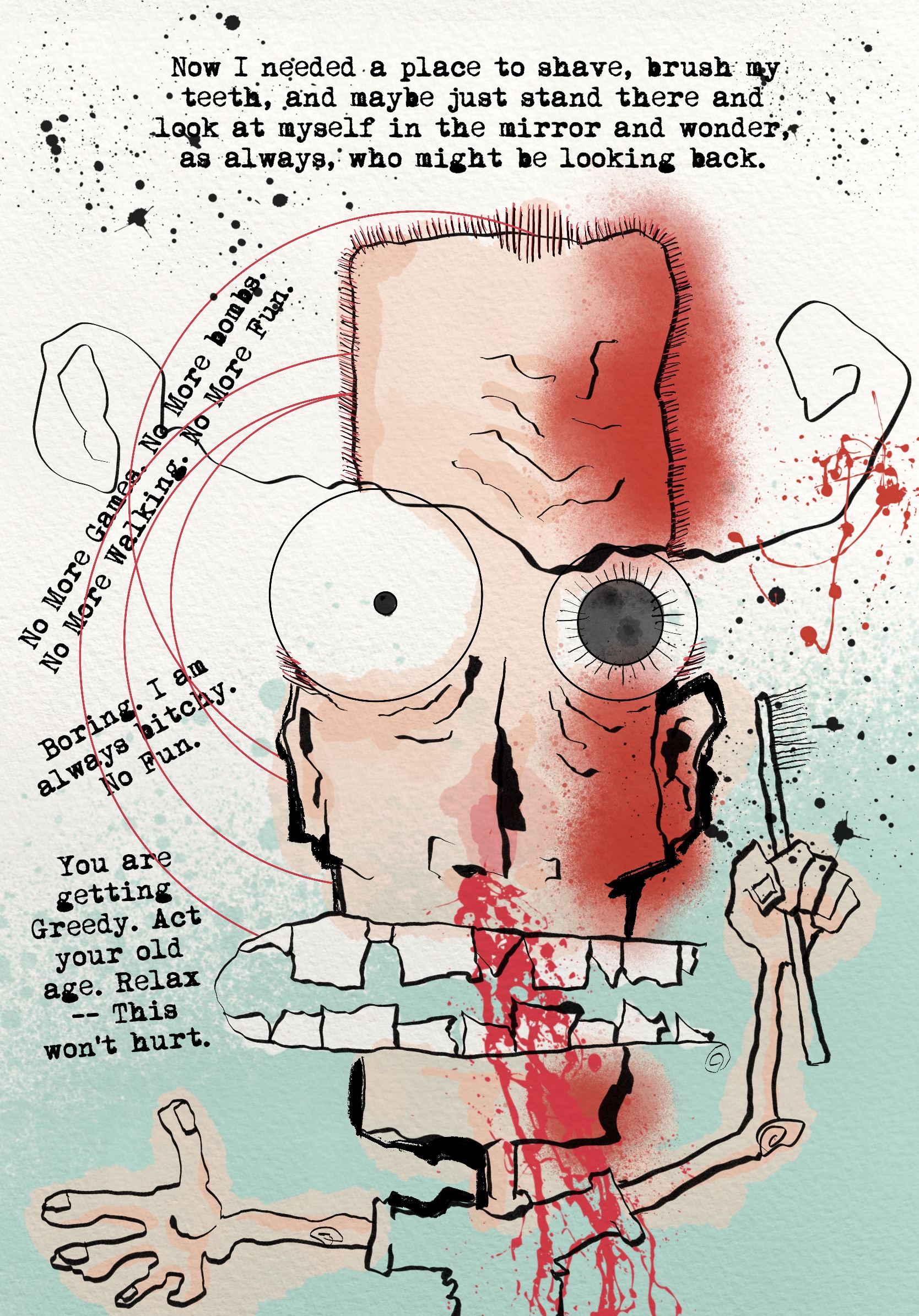
The work already carries the weight.
In writing about an artist like Dicky, you have to be careful not to over-mythologize the work, because the work itself already carries the weight — it's sincere, blunt, and a little dangerous, the way an honest thought is dangerous when it hasn't been sanded down for company. His drawings move like they're happening in real time, as if the page is simply the only safe place to put the pressure, and in that sense Dicky's art isn't just about the finished image but about the act of showing up, making marks, and letting the mess stay visible long enough to become meaning.
punk violence and dad-heart, grit and devotion, the ugly truth and the decision to keep going anyway.
There's a tension at the center of what he does. He's a single father raising a daughter, and that reality leaks into the work not as sentimentality but as conviction — the sense that responsibility doesn't make you softer, it just forces you to become more deliberate about what you do with the rage, the grief, and the love that has nowhere else to go.
Splatterverse
His ongoing project, Splatterverse, is built around a simple idea with obsessive follow-through: re-imagining superheroes — often DC's icons and forgotten deep cuts — through an ink-splatter language that nods to Steadman's feral honesty and Basquiat's skeletal symbolism, turning pop mythology into a kind of emotional field report. The characters are recognizable, but they're not polished, and they're not there to comfort you — they're there to witness you.
↑ headlines that recur in the work — heroism less as costume, more as endurance.
Even when the subject is familiar, the approach stays intimate: the page behaves like a sketchbook entry you weren't supposed to see, full of false starts, stains, sharp turns, and handwritten fragments that read like evidence rather than explanation.
While Splatterverse began with superheroes, it isn't limited by them. The same visual vocabulary can swing into self-portraiture, scripture, nostalgia, or whatever obsession has teeth that day, and the thread that holds it all together is simple: process over performance, sincerity without self-pity, and a refusal to quit before the work becomes real.